If you’ve started searching for places to stay near Tirthan Valley, you’ve probably noticed the problem already: there are a hundred listings, half of them photographed a decade ago, and almost none of them tell you what the experience actually feels like once you’re standing there with your bags. This guide is meant to fix that. We’ll walk through the different kinds of stays available across the valley, which village suits which kind of traveler, and why a growing number of people are choosing to base themselves a little off the main road in a quiet hamlet called Deotha, for a more comfortable, private stay near Tirthan Valley.
Tirthan Valley isn’t one single town with one street of hotels. It’s a string of villages following the Tirthan River up toward the Great Himalayan National Park, each with its own character. So the honest answer to “where should I stay” depends on what kind of trip you’re planning and that’s exactly what we’ll help you figure out below.
What’s Covered in This Guide
- Where Tirthan Valley actually is, and why location matters
- The different types of places to stay near Tirthan Valley
- A village-by-village breakdown: Gushaini, Banjar, Jibhi, Sai Ropa, and Deotha
- Why Deotha is becoming the go-to pick for a luxury stay near Tirthan Valley
- A closer look at BhigaSa, a luxury homestay in Deotha
- What to check before booking the best luxury room near Tirthan Valley
- Best time to visit, things to do, and how to get there
- Frequently asked questions
Where Exactly Is Tirthan Valley, and Why Where You Stay Matters
Tirthan Valley sits in the Banjar tehsil of Kullu district, Himachal Pradesh, following the Tirthan River up from Larji toward the buffer zone of the Great Himalayan National Park (GHNP), a UNESCO World Heritage Site. The valley earns its reputation honestly, it’s one of the few rivers in the western Himalayas without a hydroelectric project on it, which is part of why the water stays so clear and why trout fishing here has a small but devoted following.
Because the valley is really a chain of small settlements rather than one town, your choice of base changes your entire trip. Stay too close to the main Aut–Banjar road and you’ll deal with through-traffic and noise. Stay too deep inside the GHNP buffer zone and you’ll have stunning isolation but a longer drive to facilities. The sweet spot for most travelers is a village close enough to reach the main attractions within 30–45 minutes, but far enough to actually hear the river and the birds instead of passing vehicles.
Types of Places to Stay Near Tirthan Valley
Accommodation across the valley has grown a lot in the last decade, and it now spans a wide range. Here’s how the main categories break down.
Budget Homestays
Simple, family-run rooms attached to a local house, often with shared bathrooms and home meals served at fixed times. These are great for backpackers and trekkers heading into the GHNP who just need a clean bed and an early breakfast, but don’t expect privacy, hot water on demand, or much in the way of design.
Riverside Camps
Tented stays set up along the Tirthan, popular with groups doing rafting, river crossing, or a short adventure weekend. Comfortable in peak season, but seasonal most shut down or scale back through winter and heavy monsoon, and noise carries easily between tents.
Mid-Range Guesthouses
Small hotels and guesthouses, mostly clustered around Banjar and Gushaini, offering attached bathrooms, basic room service, and a restaurant menu rather than home-cooked meals. A solid, no-surprises option if your main goal is proximity to the trekking trailheads.
Luxury Boutique Stays
A smaller, newer category, boutique homestays and lodges with thoughtfully designed rooms, private balconies or sit-outs, king beds, and a genuine focus on hospitality rather than just providing a room. This is where a stay like BhigaSa in Deotha fits in: fewer rooms, more attention per guest, and an experience built around slowing down rather than ticking off a checklist.
Best Areas to Look for a Stay Near Tirthan Valley
Gushaini: Closest to the GHNP Gate
If your trip is built around trekking into the Great Himalayan National Park, Gushaini is hard to beat for sheer convenience. It sits right at the edge of the buffer zone, with permits and guides easy to arrange. The trade-off is that it’s also the most crowded village in the valley during peak trekking season.
Banjar: The Practical Base
Banjar is the administrative headquarters of the region and the place to go if you need an ATM, a pharmacy, or a proper local market. It’s a sensible base if you want easy access to supplies, though it’s less scenic than the villages further up the river.
Jibhi: Popular and Lively
Jibhi has become the valley’s most Instagrammed hamlet, known for its waterfall, wooden cottages, and a growing number of cafés. It’s a lovely stop, but its popularity means it can feel busy in peak season, with more construction and traffic than the quieter villages nearby.
Sai Ropa: Forest Department Stays
A small settlement known mainly for its forest rest house, Sai Ropa appeals to travelers who want something rustic and official rather than boutique. Bookings typically go through the GHNP park office and availability is limited.
Deotha: The Quiet Alternative
Deotha is a small village a short drive from Jibhi, set against thick pine and oak forest with the kind of silence that’s genuinely hard to find in the busier parts of the valley. It hasn’t been overrun the way Jibhi has, which means a stay in Deotha still feels like you’ve found the place before everyone else did. For travelers specifically searching for a calmer, more private, and more comfortable base — rather than the backpacker-trail energy of Gushaini or Jibhi, Deotha has quietly become one of the better-kept options in the region.
Why Deotha Is Becoming the Preferred Choice for a Luxury Stay Near Tirthan Valley
Three things tend to push travelers toward Deotha once they’ve done a bit of research. First, the privacy with fewer properties in the village, you’re not sharing a wall, a view, or a breakfast table with three other groups. Second, the setting: Deotha is wrapped in jungle, with the kind of birdsong-and-mist mornings that the more developed villages have started to lose to construction. Third, it still keeps you close enough to everything, Jibhi’s waterfall, the Tirthan River, Chehni Kothi, and the GHNP gateway villages are all within a comfortable drive, so you’re not trading convenience for quiet.
This is exactly the gap that a luxury stay near Tirthan Valley needs to fill not a five-star hotel with a pool and a spa menu, but a handful of well-designed rooms, real hospitality, and a setting that actually earns the word “retreat.”
BhigaSa: A Luxury Homestay Experience in Deotha
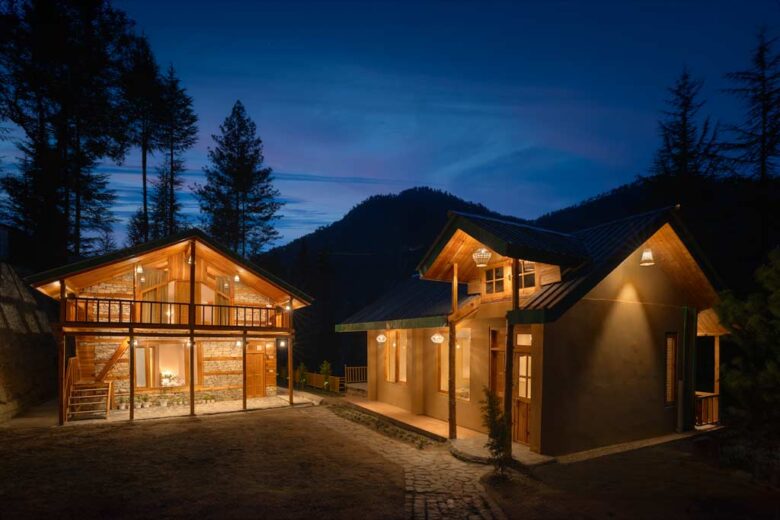
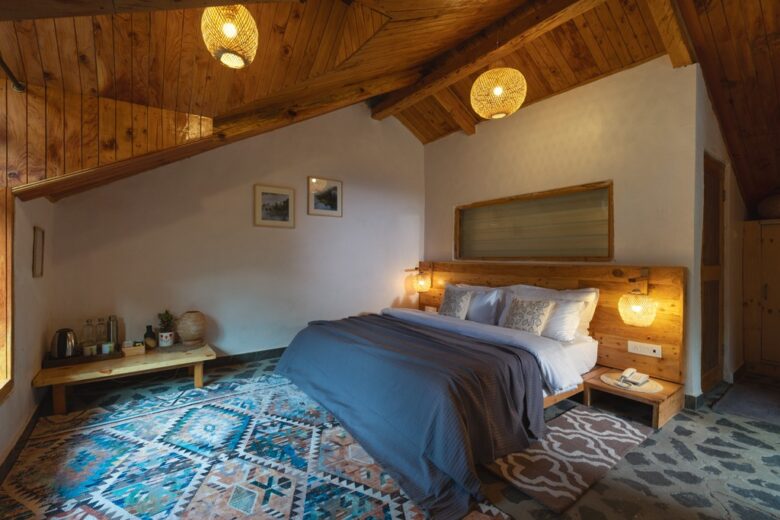
BhigaSa sits in Deotha village in the Banjar tehsil of Kullu, close to Jibhi and the wider Tirthan Valley belt, and it’s built around exactly the idea above a small, boutique homestay rather than a large resort. The property offers four boutique rooms, each around 300 sq ft, considerably more spacious than the typical valley homestay room, and each with a king bed and either a private balcony, sit-out, or deck looking straight into the surrounding forest.
Rooms at BhigaSa
| Room | Size | Occupancy | Highlight |
| Barkha | 300 sq ft | 2 Guests, 1 King Bed | Ground-floor room with large windows opening onto jungle views |
| Baadal | 300 sq ft | 2 Guests, 1 King Bed | First-floor room with a private sitting deck |
| Parvat | 300 sq ft | 2 Guests, 1 King Bed | First-floor room with a private balcony and mountain views |
| Tarang | 300 sq ft | 2 Guests, 1 King Bed | Ground-floor room with a private seating area |
Beyond the rooms, guests often remember the peaceful pace of the place. Slow mornings create a relaxing start to the day. Home-cooked Himachali meals, prepared with fresh local ingredients, add an authentic touch. Long walks through the surrounding forest offer a chance to connect with nature.
Evenings end with colorful sunsets instead of packed itineraries, making every stay feel calm and memorable.It’s a property built for travelers who want their luxury stay near Tirthan Valley to mean stillness, not spectacle.
What to Look for Before Booking the Best Luxury Room Near Tirthan Valley
Not every property that calls itself “luxury” actually delivers it. Before you book, it’s worth checking the following:
- Room size and privacy: Choose a genuinely spacious room (250–350 sq ft) with a private balcony or sit-out. Avoid repainted budget rooms.
- The view: jungle, river, or mountain facing rooms are worth the small premium over a wall-facing room
- Meals : ask whether food is home-cooked and included, or an extra restaurant charge added on later
- Distance to the road: closer to a motorable road means easier luggage handling and a smoother arrival, especially after dark
- Number of rooms: smaller properties (4–10 rooms) generally mean more personal attention than a 30-room resort
- Connectivity: mountain wifi can be patchy almost everywhere, so confirm in advance if you need to stay reachable for work
Best Time to Visit Tirthan Valley
March to June offers mild weather, blooming orchards, and some of the clearest mountain views of the year. It is also the most popular season for first-time visitors. September to November brings crisp air, golden autumn scenery, and fewer crowds than spring. During the monsoon (July–August), the valley becomes lush and vibrant. However, landslides can affect access roads, making this season better for flexible travelers. Winter is cold and much quieter. It is an excellent choice for those seeking a peaceful retreat with cozy fireplaces and snow-covered landscapes.
Things to Do Near Your Stay
- Trek into the Great Himalayan National Park from Gushaini, even a short day hike gives you a sense of the park’s scale
- Walk to the Jibhi waterfall, tucked inside the forest a short hike from the main road
- Visit Chehni Kothi, a centuries-old stone-and-timber tower temple with sweeping valley views
- Try your hand at trout fishing on the Tirthan River, one of the few unobstructed rivers in the western Himalayas
- Take long, unhurried walks through the forest around Deotha, no itinerary required
- Drive up toward Jalori Pass for panoramic views if you have an extra day
How to Reach Tirthan Valley and Deotha
By air, the nearest airport is Bhuntar (Kullu-Manali Airport), located about a 2-hour drive from Deotha. Travelers arriving by train can use Chandigarh Railway Station, the nearest major railhead, which is approximately 7 hours away by road. For a road trip, take the Chandigarh–Manali Highway (NH21) from Delhi or Chandigarh to Aut, then continue via Banjar to Jibhi and Deotha. The drive from Delhi usually takes 11–12 hours, so many visitors prefer to break the journey overnight or take an overnight Volvo bus to Aut and hire a taxi for the remaining distance the next morning.
Final Thoughts
There’s no single “best” place to stay near Tirthan Valley, it genuinely depends on whether you’re chasing a trekking trailhead, a lively café scene, or a quiet week of doing very little. But if what you’re after is a comfortable, private, well-designed base where the forest is the main event, a stay in Deotha is worth putting at the top of your shortlist. BhigaSa was built for exactly that kind of trip, four boutique rooms, home-cooked meals, and a setting where the loudest thing you’ll hear is birdsong.
Ready to plan your trip? Browse rooms and check availability at BhigaSa, or get in touch directly at hello@bhigasa.in / +91 98776 29443.
Frequently Asked Questions
Choose based on your preference: Gushaini for nature, Banjar for convenience, Jibhi for cafés, and Deotha for a peaceful luxury stay.
Deotha is near Jibhi and Great Himalayan National Park, offering a peaceful base with scenic Himalayan views and fewer crowds.
At a genuine luxury homestay, expect spacious boutique rooms (not cramped budget cells), a private balcony or sit-out facing the jungle or mountains, a comfortable king bed, attentive but unobtrusive hospitality, and home-cooked Himachali meals made with local produce rather than a generic restaurant menu. The luxury here is quiet, space, and warmth not chandeliers.
Deotha is roughly a 35 to 45 minute drive from Gushaini and the GHNP entry point, and closer still to Jibhi, the Jibhi waterfall, and Chehni Kothi. It’s near enough for a day trip into the valley’s main sights, while still being tucked away from the peak-season traffic that the more popular Tirthan villages see.
March to June brings mild days, blooming orchards, and clear mountain views, while September to November offers crisp air and golden autumn light both are considered the most pleasant windows. Monsoon (July–August) turns the valley intensely green but brings landslide risk on the access roads, and winters are cold and quiet, better suited to travelers who specifically want a fireside, snow-dusted retreat.